Episode Transcript
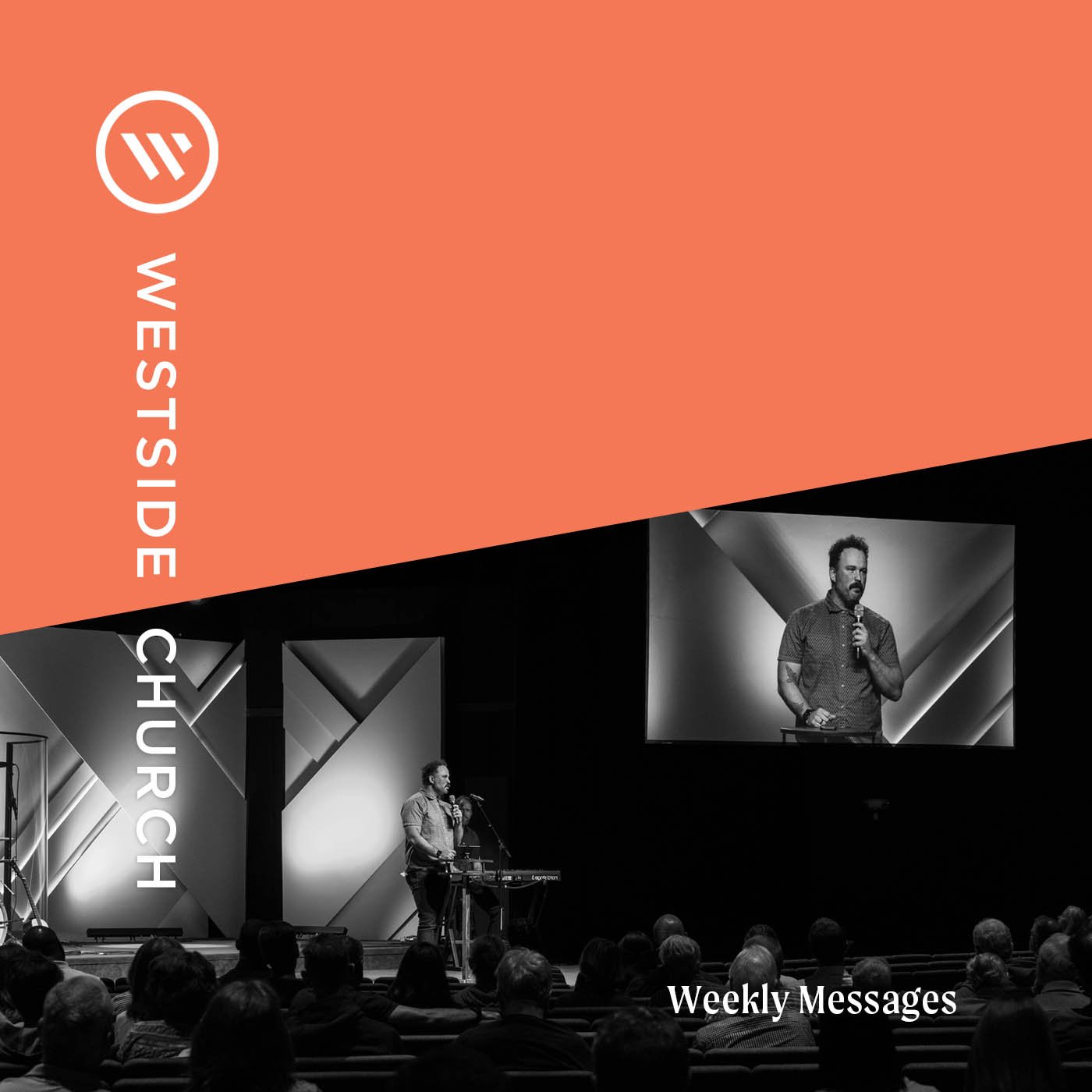
[00:00:00] You're listening to a live recording from Westside Church in Bend, Oregon. Thanks for joining us.
[00:00:06] Today we're going to talk about a story of Jesus back in the temple in John chapter seven. We've been walking through John's gospel, and today we're going to look at how Jesus challenges the idea that for those who have religious credentials, that they are the ones who can see the best.
[00:00:26] And when Jesus walks into the room, we're going to find out. Today he invites all of us to open our eyes to the truth of who he is.
[00:00:35] There is something about Jesus that causes us to realize that we are all in a process of understanding more about who God is. That if we are growing in our faith, we are changing. We are understanding more and more about who God is and what he intends to do in his world.
[00:00:55] And to understand him is to see him clearly. I was remembering several months ago we went out to lunch after Sunday services here at the church. And we're sitting in the restaurant waiting for our food to come out, and I look over and at the register ordering their food is a couple from the church. It's like, ah, I should go say hi to them. I haven't seen them in a little while. And so I walk up to the counter and their backs are towards me and I get up to them and I put my hand on both of their shoulders and they turned to me. And I've never seen these people before in my life, but now I'm touching them.
[00:01:29] And so in that moment, I had to make the decision.
[00:01:33] Do I admit how awful I feel because I've done something terribly embarrassing or do I make them feel awkward?
[00:01:41] I did the latter. I just pretend like I knew them well. And I said, it is so good to see you guys.
[00:01:49] And the look on their faces is exactly as you'd imagine.
[00:01:53] They don't know me.
[00:01:55] And so they said, oh, yes, hi.
[00:01:58] And I responded with a and the food here is so good. And I walked back to my table and I would say that I avoided eye contact with them for the rest of the meal, but trust me, they were not looking my direction.
[00:02:11] Stay away from that guy, whoever he is.
[00:02:14] The invitation of Jesus in the Gospel of John is always to get close enough to where we realize what we don't know.
[00:02:21] This is always the invitation of Jesus. And for all those that think they've got it all figured out and they have a corner on God and they've drawn the box around what God is and who he is and how he interacts with humans, and what it takes to get on God's good side. All those boxes Jesus comes to break and to disrupt and to push back against, because God is expressing through Jesus in a way that the people have never seen.
[00:02:50] And John, again and again, is going to portray the story of Jesus as an invitation to throw out what you thought you knew about God because he's better and he's bigger and he's more than you thought he was.
[00:03:02] This is the invitation of Jesus, and this is the invitation of John.
[00:03:07] And so today, we are going to look at a moment when Jesus not only challenges what people think about who God is, but he's going to declare himself to be the light of the world.
[00:03:21] This metaphor of light as God's presence is something that is very key to understanding the world that Jesus lived in.
[00:03:29] Jesus in this passage is going to the temple in Jerusalem for one of the great Jewish festivals, the Festival of Tabernacles.
[00:03:38] And the festival is celebrating the moment in the wilderness where God is leading his people by this pillar of fire at night, this miraculous appearance of fire that leads the people through the wilderness in the darkest nights. And it's this metaphor, this understanding of God's presence as fire and light that is central to the festival that Jesus is going to with his disciples.
[00:04:06] And so we're going to pick up the story in John 7 as we've been doing throughout this whole series. In John, I'm going to invite you to stand as we read from John chapter seven. So would you stand with me as we read God's word this morning?
[00:04:22] John 7, starting in verse 37, on the last and greatest day of the festival, Jesus stood and said in a loud voice, let anyone who is thirsty come to me and drink whoever believes in me. As Scripture has said, rivers of living water will flow from within them.
[00:04:40] By this he meant the Spirit, whom those who believed in him were later to receive. Up to that time, the Spirit had not yet been given, since Jesus had not yet been glorified.
[00:04:51] On hearing his words, some of the people said, surely this man is a prophet. Others said, he is the Messiah.
[00:04:57] Still others asked, how can the Messiah come from Galilee? Does not Scripture say that the Messiah will come from David's descendants and from Bethlehem, the town where David lived? Thus the people were divided because of Jesus. Some wanted to seize him, but no one laid a hand on him. And we jump down to chapter 8, verse 12. When Jesus spoke again to the people. He said, I in the light of the world, whoever follows me will never walk in darkness, but will have the light of life. And so, Lord Jesus, we receive your words from the book of John. Today we pray that you would be the water that satisfies our souls and the light that leads us in darkness. We pray this in the name of the Father and the Son and the Holy Spirit. Amen. Amen. You can have your seats. Thank you.
[00:05:43] Jesus is the light of the world.
[00:05:48] This is maybe difficult for us to understand just how controversial these statements that Jesus makes would have been in his day. Two of the ceremonial moments, the biggest moments of this festival that Jesus is at, is the pouring of water over the altar to symbolize how God provided water from the rock in the desert for his people. And then the lighting of these giant ceremonial menorahs, these candelabras that were set up in the temple courts to symbolize the real presence of God among his people.
[00:06:21] So in these moments, Jesus is not only saying statements that really cause a stir, he is directly tying himself to God's real presence and provision among his people.
[00:06:34] And this is especially pertinent when you realize when John is writing this, the temple has actually already been destroyed by the romans.
[00:06:44] So in 70 AD, the Roman Emperor Domitian leads a group of Roman soldiers and they take over the Jerusalem Temple. They burn it and they loot it, and they take away all of the sacred items from the temple in Jerusalem. This is possibly the greatest wound to the Jewish people and the Jewish identity that they've had in generations as the Romans take over and destroy the temple in Jerusalem, which is the seat of their national identity and, of course, their religious identity. And if you go today, actually to the city of Rome, and right next door to the Coliseum, at the entrance to the Forum, you'll see the Arch of Titus, which commemorates this moment when the Emperor Domitian takes over and conquers the Jerusalem Temple.
[00:07:37] And a relief on the inside of this to this day. You can see it. There is the Roman soldiers hauling off the loot from the temple in Jerusalem. And you can see there the menorah being carried off on the shoulders of the Roman guards as they bring it back to the city of Rome. And then the Emperor declares the city of Rome to be the city of God because of these artifacts that they take from the Jerusalem Temple.
[00:08:01] So this is a big deal not only to the Jewish people that John is writing to, but also in. In the known Roman world, this is a huge deal that the light of the Jewish people is represented by these candelabras. So when John is writing this story of Jesus entering into the Temple for the festival of tabernacles. As they're celebrating the light of God amongst his people, those that are hearing John's words for the first time in the first century are feeling this pang of regret and grief and sorrow and sadness because the light of their nation, the light of their religion, has been snuffed out by the power of Rome. And all those things that meant so much to them, that were their cultural anchors, have now been taken and stolen and now sit in a pagan temple in the city of Rome.
[00:08:54] And so they are reeling from this loss of their identity.
[00:08:58] And for John's audience, some 50 or 60 years after the moment that Jesus stands in this temple, they are feeling the sadness of wishing they could go back to when they were celebrating the light and the presence of God among them in the temple. And so as John is writing this, that Jesus is entering into this festival, all of his readers that are of Jewish descent are thinking, I wish I could be there.
[00:09:22] I wish I could experience what has now been lost, that the light has now gone out.
[00:09:28] And it's to them and to us, whoever, feel like we wish we could go back. Do you ever have those feelings where life has taken a turn, life has gone someplace, and you think, man, the light has gone out. To all of us who have ever felt that regret and that grief of what has been lost, John writes to us that Jesus stood in the middle of that courtyard in the light of those menorahs, and he declared that these are not the light of, of the world because I am here and now. Wherever you put your faith and your hope, know that those things may fall and those lights may go out, but there is a light that will never go out. And Jesus declares himself to be that light.
[00:10:12] And so we are encouraged and challenged that wherever we have put our faith, in whatever lesser light we have put our trust and our hope that today we would look to the man who stands in the middle of the courtyard and realize that the light is no longer a place or a building or a national identity.
[00:10:32] Our hope and our light is a person and it's Jesus.
[00:10:38] And in this modern world we live in, I heard somebody once say, you know, the worst among us, those who have it, the worst among us have life that is far better than any 14th century French king.
[00:10:54] That's an interesting way to put it, but it's true.
[00:10:57] The ease and the convenience and the comforts of life that we have lull us into this sense of security where we put our hope in the light of material wealth or maybe as churchgoing people, we put our light and our hope in the light of a moral high ground, that we're better than other people, and so that makes us feel good.
[00:11:18] Or it's the light of an ideology that makes the world make sense, the light of a tribalistic understanding that tells us who's in and who's out, the light of personal identity that makes us feel secure in who we are.
[00:11:30] And all these things, they show up as a sense of comfort and identity and security.
[00:11:37] And Jesus would tell us that those things will all eventually fail us, and we have to put our hope in a light that will never be extinguished.
[00:11:47] And in John 1:4, from the very beginning, John lays it out. He says, a light has shone in the darkness and the darkness cannot extinguish it.
[00:11:58] And for John, living in a tumultuous world where at the time of the writing, all his friends are now gone. They're gone.
[00:12:07] And all that was so comforting about his younger years as he was walking with Jesus and walking, all that has changed, and yet he still sits in this place as an old man. And he would tell us that there is a light that cannot be extinguished by darkness, and that light is Jesus.
[00:12:27] So Jesus makes these bold claims in the temple courts. And then, as if to prove it, the ultimate illustration of what he's talking about, he encounters a man born blind in John chapter nine.
[00:12:41] And this man was well known. John tells us he was begging every day in the temple courts. And so Jesus, now it's the Sabbath day with his disciples. He sees this man born blind. And the disciples ask him, they say, rabbi, why was this man born blind? Was it because of his own sins or his parents sins?
[00:13:02] And Jesus responds, he says it was not because of his sins or his parents sins. This happened so that the power of God could be seen in him. We must quickly carry out the tasks assigned by the One who sent us. The night is coming, and then no one can work. But while I am here in the world, I am the light of the world.
[00:13:20] And I imagine that the blind man is sitting there thinking like, what is he talking about? Is he referring to me? What is going on?
[00:13:27] And for this man, it's about to get even weirder because it says in verse six, then he spit on the ground, Jesus. He made mud with the saliva and spread the mud over the blind man's eyes. We don't even know if he asked permission.
[00:13:45] He just goes ahead and does this.
[00:13:47] And then he tells him, go wash yourself in the pool of Siloam. Siloam means scent. So the man went and washed and came back seen.
[00:13:56] This is a strange thing, because Jesus has proven that he can heal with a word. He can heal with a touch.
[00:14:02] Why in the world would Jesus do something so unsanitary as to spit in the mud and then cake that on the man's eyes? And I always think when we get to this passage, that Jesus is interested not only in healing the man, but inviting the man into participation in the miracle.
[00:14:21] When you got mud on your eyes, you got to do something.
[00:14:24] You got to do something.
[00:14:26] And so the question for this man was not, do you want to be healed? Like we talked about a couple weeks ago with the man by the pool of Bethesda, it was, will you do what I ask you to do now that I've encountered you?
[00:14:40] And so for this man, he has mud in his eyes. Surely there is water closer than the pool of Siloam, which is actually quite a walk away.
[00:14:49] And yet Jesus gives him specific instructions as if to say, do you want to be healed? Do you want to participate in this miracle? Are you willing to believe in me?
[00:15:00] And evidently, the man obeys. And so instead of finding the nearest drinking fountain, he walks to the pool of Siloam and comes back seen.
[00:15:10] And John's account tells us this happens on the Sabbath, which, as we talked about a couple weeks ago, there's a lot of rules about what you can't do on the Sabbath. Healing on the Sabbath was a no, no. Walking too far on the Sabbath was a no, no. And there's all these rules around the Sabbath, which always makes me wonder, Jesus, have you ever considered that you could show up to the temple on a Monday and heal people?
[00:15:30] Like, why do you insist on pushing the buttons of the religious leaders by healing on the Sabbath, which you know is going to get them upset at you?
[00:15:40] And here's what we find again and again in the story of Jesus that oftentimes Jesus is not interested in avoiding conflict with religious leaders. And the whole point is to get in those spaces where religious leaders have created barriers to experiencing God for the people.
[00:15:56] And by pushing the buttons of the religious leaders, what he's doing is he's pushing back against the obstacles and the scaffolding that has been set up to keep people from God.
[00:16:07] And so I want to have courage as your pastor, I want you to have courage as people of faith that the ultimate way to follow Jesus is not always to avoid conflict in every area, but it is to push back against those that reduce the dignity of people and Reduce the ability of people to experience the compassion and mercy of God, the forgiveness of sins and the entrance into life. And religious systems will always have the veneer of being those things that allow people to experience God's mercy. And yet religious systems are oftentimes those things that keep people from it.
[00:16:43] And so what we wanna do is have the courage to push back against those religious understandings and those boxes that people put around how God can interact with us. We want to push back against those things in the heart of Jesus so that, like him, we can enter into spaces where hurting people really are and reveal to them that God loves them, he is for them, and he's here to heal them.
[00:17:08] And so this takes courage, this takes a willingness to get up in the faces of religious systems and structures that would keep people from experiencing God's mercy.
[00:17:19] Jesus does this beautifully. And the Pharisees, the religious leaders are all up in arms and so they go and they interrogate this man and they have this back and forth with him and they're asking him, like, tell us more about this Jesus. They want to figure out ways to get at Jesus and to arrest Jesus.
[00:17:38] And In John chapter 9:25, the man replies to them, whether he is a sinner or not, I do not know.
[00:17:45] One thing I do know I was blind, but now I see.
[00:17:50] And isn't that the story for so many of us that something about Jesus, something about what we've experienced of God's grace and his presence hasn't led us to being scholars or experts that know all the theology inside and out. And we figured all that out before we said yes to Jesus. And instead, it's much like this man who knows very little about the ins and outs of who Jesus was, who he claimed to be, who he came to be, what he said he was. He doesn't know any of that. But he knows this, that just an hour ago he was sitting blind by that gate. But now he can see because Jesus encountered him.
[00:18:33] And isn't that our story?
[00:18:36] Isn't that our story that somehow Jesus showed up in our lives when we were alone and isolated and far from. From community and something changed because he came close. We were lost in addiction that was controlling our lives and Jesus showed up and something broke.
[00:18:55] I was blind, but now I see. And I will tell you the most compelling part of following after Jesus is not the logical arguments that we can come up with to support our positions. It is the encounters that we've had with the real living presence of Jesus, who is the water in the Wilderness. And who is the light and the life that we follow after, when we've encountered that? And he shows up in our lives and transforms us. That is the most powerful evangelistic tool you will ever have, is a life changed by grace.
[00:19:31] And so we echo some of maybe the most beautiful words uttered by someone that's not Jesus or the apostles in all the New Testament.
[00:19:40] I don't know much about him, but one thing I do know, I was blind, but now I see.
[00:19:47] This man's story reminds me of one of the early Church fathers. In about 350 A.D.
[00:19:54] in North Africa, a little boy was born, named Augustine, and his mother was a Christian in Rome and North Africa.
[00:20:06] And his father was a pagan. And so he grew up in the tension of these two religious understandings.
[00:20:12] He's a brilliant young man and also very wild at heart.
[00:20:18] And he gets saved as a young man. And he would write one of the most prolific early Christian writers we have.
[00:20:28] And in his book Confessions, which is a famous early Christian faith, he writes about his early life and how wild he was. And he said this prayer, which I think is amazing. He said, lord, make me chaste, but not yet.
[00:20:47] I want to follow you, but give me a little bit of time to be wild first, right?
[00:20:52] But the way he talks about himself, especially being such an ancient text, it's striking how honest he is about his own moral failings and the struggles that he had.
[00:21:04] And he writes this prayer. And I wanted to read this prayer in its entirety. It's a little lengthy, but I think it's a beautiful expression of what it is to have an encounter with Jesus that opens our eyes and takes away the blindness that we all face.
[00:21:19] St. Augustine writes, late have I loved you. O beauty so ancient.
[00:21:23] O beauty so new.
[00:21:24] Late have I loved you.
[00:21:26] You were within me, but I was outside myself. And there I sought you in my weakness. I ran after the beauty of things that you have made. You were there with me, and I was not with you.
[00:21:36] The things you have made kept me from you. The things which would have no being unless they existed in you.
[00:21:43] You have called, you have cried, and you have pierced my deafness.
[00:21:48] You have radiated forth. You have shined out brightly, and you have dispelled my blindness.
[00:21:54] You have sent forth your fragrance, and I have breathed it in, and I long for you. I have tasted you, and I hunger and thirst for you. You have touched me, and I ardently desire your peace. Amen.
[00:22:07] That this would be our heart, that whatever life has been to this point, that today, on this day that we would say, lord, open my eyes, Lord, let me see you. Let me hear your voice. Let me be compelled to follow after you and run after you.
[00:22:27] Because here is the truth. We are all blind in ways that maybe we know about and maybe we don't. And can I tell you that you have permission to be wrong today?
[00:22:36] Sometimes I think that we have this feeling of if we never admit that we are wrong, somehow that gives us strength. Can I tell you what never admitting you're wrong does.
[00:22:45] It makes you kind of stupid.
[00:22:50] Because we all grow and we are changed as we continue to learn from Jesus and as we follow after him. I hope I'm learning something new as I follow after Jesus today. I hope 10 years from now. I don't say I didn't learn anything from 2026 to 2036. That was my no learning years.
[00:23:13] I want a learning church. I want a community that we're always saying, lord, teach me your ways.
[00:23:18] I think back to the Book of Job. The oldest written book in our Bibles is the Book of Job. Scholars believe it's the most ancient of all the written texts and that God is speaking to Job, who's had a really hard go, like, by definition, the hardest go.
[00:23:36] And God speaks to him and he says, listen, all that you know about me, these are only the mere edges of my ways.
[00:23:45] You've only put your toe in the ocean of knowing me.
[00:23:52] And so, like Augustine and like Job and like John and like this blind man we are invited to with great humility, look to Jesus today and say, lord, there's so much I don't know.
[00:24:04] Teach me your ways.
[00:24:06] Open my eyes.
[00:24:08] And where there is blindness, I want to see again.
[00:24:14] Psalms 27:1 says, the Lord is my light and my salvation.
[00:24:20] Whom shall I fear?
[00:24:21] The Lord is the stronghold of my life. Of whom shall I be afraid? When we turn to Jesus as the light of the world and the light of our world, we can lay down fear.
[00:24:32] And I think the reasons we stay willfully in the dark when it comes to knowing who Jesus are three reasons.
[00:24:40] These are, I would say, intuitive. But number one is pride. I don't need help.
[00:24:45] I don't want to look stupid.
[00:24:50] Two, control. I don't want to change. This works for me, like staying in control of my own life and fear. I've been disappointed before. I've gone up to the counter and realized I don't know these people, so I'm not gonna do that again, right?
[00:25:02] And yet, when we're willing to lay down our pride, our control and our fear and face Jesus. We are changed by his presence.
[00:25:10] And so I wanna do this before we go into communion together is just take a moment in prayer. If you'd close your eyes with me just for a moment.
[00:25:19] And that we would ask the Lord today, Jesus, where are there areas in my life where I have stayed willfully in the dark, in the ways I think and feel that today I need to open my eyes and my heart up to you? Jesus, Where are there stories that we believe about myself or God that just simply aren't true?
[00:25:50] That today Jesus could rewrite those stories as we see with clarity and vision who he is?
[00:26:00] So Lord, be our light Today we pray, Jesus, open our eyes where we've gone blind to your way and to your love.
[00:26:11] We pray for the humility and the willingness to admit that we need to learn from you and be led by you and be changed by you.
[00:26:22] That you would transform our hearts and our minds even as we surrender to you.
[00:26:28] Lord Jesus, we receive your grace in our lives in all the ways that we get it wrong and that we will get it wrong. We pray that you would be close with your forgiveness, your mercy and your light.
[00:26:45] We pray this in your name, Jesus. Amen. Amen.